


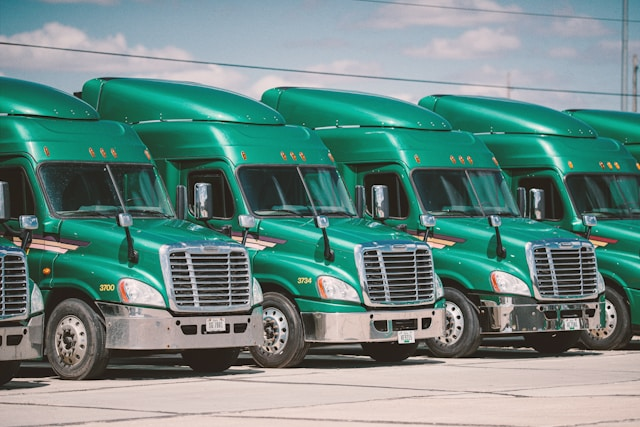
Fleet telematics systems, at the very core of modern fleet management, amalgamate GPS technology, onboard sensors, and vehicle engine data to supercharge efficiency in fleet management.
These systems have drastically transformed industries such as transport, construction, and site excavation, experiencing enhanced efficiency, reliability, and service.
By providing real-time data and actionable insights, fleet telematics systems transmit secure data to a central hub, informing operational decisions and reinforcing the performance of fleets.
Furthermore, these systems address key managerial challenges, enabling cost efficiency, compliance with regulations, and better utilization of resources.
The extensive benefits of a fleet telematics system go beyond traditional fleet management.
They offer proactive maintenance scheduling, and resource optimization across various vehicles, and industrial sectors, making them indispensable in the modern landscape of fleet operations.
Telematics is an enthralling technology that merges telecommunications and informatics to transmit vehicle-specific data over long distances.
With the evolution of the internet and telecommunications, telematics has grown from basic tracking to advanced fleet telematics systems that manage vehicle and driver performance with precision.
These systems are composed of essential hardware like GPS devices, various sensors, communication technology, and sophisticated software.
They gather important data such as the vehicle’s location, speed, fuel usage, engine health, and driver performance. This information is key for effective vehicle monitoring and management, leading to better maintenance practices and a more efficient fleet.
Telematics devices play a crucial role by sending job information and performance updates to drivers, providing a complete overview of fleet activities, and improving communication between managers and drivers while monitoring driver performance closely.
Moreover, the security of telematics data is paramount, with encryption safeguarding the confidentiality and integrity of the information, thus protecting it from unauthorized access.
Some of the key functions of telematics in fleet operations are:
Improving vehicle tracking
Enabling efficient routing
Facilitating job dispatch
Capturing comprehensive data to provide insights into driver behavior, shedding light on habits like aggressive driving or excessive idling.
Furthermore, telematics systems are instrumental in reducing the consumption of fuel by identifying inefficient driving practices and suggesting more efficient routes.
Fleet telematics systems have come a long way since their inception.
The integration of wireless communication technologies in the early 2000s signaled a significant shift in fleet telematics, allowing for real-time data transmission and remote communication for the entire fleet.
Cloud-based fleet management services accounted for 65% of the market share in 2022, signifying the wide adoption of digital solutions within the fleet management telematics industry.
Machine learning has been a game-changer, enhancing vehicle maintenance efficiency by predicting service needs from actual data points, thus reducing unnecessary maintenance and downtime.
Additionally, the use of historical data has been instrumental in optimizing operations, as it aids in identifying performance patterns and informs the optimization of routes and other strategic decisions.

Let’s now delve into the significance of employing fleet management software such as EMDECS, and how its integration with telematics data provides a holistic overview of your entire fleet operation.
Utilizing EMDECS in conjunction with telematics data equips fleet managers with a comprehensive suite of tools essential for enhancing fleet management and maintenance.
This synergy directly influences the efficiency and profitability of fleets, regardless of their size.
Specifically designed for the heavy-duty trucking industry, EMDECS streamlines management processes by enabling paperless repair orders and real-time operations tracking.
This integration offers valuable insights into every aspect of fleet management, from logistical operations to maintenance schedules, painting a complete picture of the fleet’s performance.
By combining the granular data captured by telematics—such as vehicle location, fuel consumption, and driver behavior—with the features of EMDECS, fleet managers gain a powerful, unified system for overseeing their fleets.
One of the key advantages of EMDECS is its flexibility within a fleet telematics system.
It provides customizable tools that manage a diverse range of vehicles, including specialized sectors such as heavy-duty trucks and public transportation.
Moreover, EMDECS features user-defined fields for assets, automatic inventory updates, and personalized dashboards to meet the particular operational requirements of different fleets.
EMDECS isn’t just adaptable; it’s scalable too. The system can efficiently scale to fit the needs of various fleet sizes, serving everyone from smaller repair shops to large enterprise customers.
As your fleet expands, the system supports scalability in terms of user licenses, accommodating any number of technicians and administrators.
The power of fleet telematics and data analysis shines through with EMDECS. It features detailed reporting and analytics capabilities that support the creation of custom reports for comprehensive fleet management.
These capabilities enable the monitoring of key performance indicators, which are essential for guiding strategic decision-making in fleet operations.
The platform’s analytics tools are specifically tailored to support informed fleet management decisions, enhancing overall operational efficiency.
By leveraging EMDECS’s comprehensive data & reporting/analysis features, fleet managers can further analyze fleet telematics data and glean actionable insights for effective decision-making.

The impact of telematics on fuel efficiency and cost reduction is significant, to say the least. Telematics systems provide insights into vehicle locations, fuel consumption, and driver behavior, which are essential for monitoring and improving efficiency. By combining telematics with fleet card data, fleet managers gain a comprehensive information pool, enhancing fuel economy through actionable insights.
Moreover, vehicle diagnostics, as part of telematics data, assist in:
maintaining environmental standards
uncovering inefficiencies
contributing to improved fuel efficiency
eco-friendly operation
Fuel consumption is a critical concern for fleet managers, and a telematics system can provide a fleet manager with invaluable insights for its management.
Telematics data from vehicle sensors provides fleet managers with detailed information on consumption, driving patterns, engine temperature, and incidents of harsh breaking, which is crucial for analyzing fuel usage patterns and identifying inefficiencies.
By identifying idling locations and patterns, and enforcing idle reduction policies, unnecessary fuel consumption caused by vehicle idling can be significantly reduced through the strategic application of a telematics system.
Moreover, by monitoring and reducing instances of harsh braking, the system can enhance vehicle efficiency and safety.
Additionally, advanced telematics contributes to fuel cost optimization by:
Enhancing route planning
Reducing engine idling and harsh braking
Monitoring for unauthorized use
Tracking parameters such as routes, fuel use, tire pressure, and breaking patterns.
Telematics plays a vital role in route optimization by utilizing the Internet of Things that Move (IoTtM) for efficient routing location tracking, scheduling, and resource optimization. Some benefits of telematics in route optimization include:
Dynamic adjustments to routing, based on real-time factors such as traffic and weather conditions
Improved service quality
Reduced fuel consumption and emissions
Increased driver safety and productivity
By leveraging telematics technology, businesses can optimize their routes and improve overall operational efficiency.
Route optimization integrates seamlessly with telematics data, providing real-time insights, enabling trend analysis, and adjusting routes as necessary for enhanced overall efficiency.
By analyzing past traffic congestion and loading or unloading operations, telematics helps refine and optimize routes, and schedules, further minimizing idling times and contributing to fuel savings.
Telematics data, enriched with location tracking capabilities, provides valuable insights into driver behavior, which is crucial for developing training programs that promote fuel-efficient driving habits.
Fleet managers can utilize telematic systems, equipped with in-vehicle devices, to monitor driver behavior and vehicle location, offering real-time feedback that guides drivers to adopt fuel-saving behaviors like smooth acceleration and reducing idling time.
Driver training programs, informed by telematics data that includes vehicle location tracking, lead to more fuel-efficient driving practices, consequently decreasing fuel usage and emissions.
The use of scorecards serves as a monitoring tool to evaluate the effectiveness of driver training and ensure continuous improvement in driving efficiency, while also keeping a close eye on the vehicle’s location to optimize routes and reduce unnecessary mileage.

Telematics systems are key to improving fleet safety, as they monitor drivers and vehicles in real-time, helping to spot and correct unsafe behavior.
Key features of fleet telematics systems such as ELDs are fundamental in the management of driver safety and maintenance needs.
Fleet managers are empowered to take immediate corrective actions through electronic alerts generated by telematics when there is speeding, excessive idling, or in the event of an accident.
Real-time alerts from telematics systems enable immediate corrective action for unsafe driving behaviors such as speeding or harsh braking. These alerts provide in-cab audible feedback and real-time alerts to improve driver behavior and enable fleet managers to implement targeted safety training programs.
The integration of GPS tracking allows for precise monitoring of vehicle location, further ensuring that drivers adhere to the best safety practices.
Real-time alerts from advanced driver assistance systems (ADAS) contribute to preventing incidents by notifying drivers of potential collisions and other safety issues on the road.
In-cab alerts from driver monitoring systems also help in detecting and reducing distracted driving, fatigue, and other behaviors that compromise safety.
The GPS tracking component provides accurate location data that can be critical in emergency response situations.
Telematics systems enhance regulatory compliance by automatically capturing data on driver hours, vehicle maintenance, and emissions.
To support compliance with industry regulations, these systems have report-generating capabilities, helping to avert penalties.
Telematics aids in reducing administrative and operating costs and easing compliance with agreements such as the International Fuel Tax Agreement (IFTA). Geofencing technology utilized in telematics provides time-stamped records of vehicle activity that assist in upholding compliance and security logs.
Geofencing technology in telematics enhances security and control, offering fleet managers the ability to monitor fleet vehicles within designated boundaries accurately.
EMDECS works with advanced telematics devices, providing geofencing capabilities that enable fleet managers to ensure vehicles operate within predetermined safe and allowed areas, enhancing security and control.
Customizable geofencing boundaries can be created within fleet routes to ensure vehicles only operate within designated safe and allowed areas. Geofencing technology provides fleet managers with additional security features such as:
Authorized driver verification
Cargo area protection to mitigate the risk of unauthorized access to fleet vehicles
Rapid location of stolen vehicles in case of theft, which supports quicker notification to authorities and improves chances of recovery.

Telematics-driven insights are revolutionizing the maintenance landscape, offering fleet managers predictive maintenance alerts, detailed vehicle health reports, and the ability to minimize downtime with immediate diagnostics.
By using telematics tools and fleet management software, fleet managers can accurately monitor the overall health of their vehicles and receive fault alerts in real-time through in-vehicle devices.
EMDECS software takes this a step further by streamlining proactive fleet maintenance for the fleet manager, efficiently scheduling work orders, and tracking real-time updates on technician status through in-vehicle devices, ensuring timely interventions.
This proactive approach to maintenance, facilitated by efficient alerting functionality, results in reduced repair costs, minimized downtime, and efficient allocation of resources, ultimately translating into direct financial benefits for the fleet operation.
Machine learning algorithms analyze telematics data to detect patterns and anomalies, predicting potential vehicle issues for preemptive maintenance actions.
Telematics technology alerts vehicle users to potential problems early on, allowing for proactive scheduling of maintenance and avoiding major concerns.
Working with telematics devices with preventative maintenance scheduling systems, like EMDECS, offers several benefits:
Improves vehicle monitoring
Reduces the severity and frequency of repairs
Enables regular and proactive maintenance
Guides maintenance based on telematics data
Ensures vehicles operate at peak performance
Contributes to improved fuel efficiency
Real-time health updates from telematics devices facilitate early diagnosis and provide timely servicing reminders, ensuring that vehicles are maintained appropriately.
Vehicle diagnostics generate comprehensive reports that detail critical aspects of vehicle health such as engine performance and battery status, which guide maintenance actions.
Consistent use of vehicle diagnostics can enhance a vehicle’s resale value, as regular diagnostics ensure well-maintained vehicles with a documented maintenance history.

Immediate vehicle diagnostics from telematics can alert fleet managers to vehicle issues promptly, ensuring swift action toward keeping the fleet operational. The use of machine learning for immediate detection of anomalies in vehicle data facilitates quick diagnostics and interventions that significantly reduce fuel costs and vehicle downtime.
By swiftly identifying issues via onboard computer systems, telematics offers the following benefits:
Reduces repair times
Accelerates the return of vehicles to service
Minimizes the amount of time vehicles are out of service
Helps maintain seamless fleet operations.
Telematics solutions enable the strategic adjustment of routes and drivers to further minimize vehicle downtime and optimize fleet efficiency.
Cloud-based platforms like EMDECS provide the agility required for swift fleet expansion and adaptability to evolving industry demands. In-vehicle devices transfer operational data to cloud services like EMDECS through internet or satellite data connectivity.
To ensure data security within cloud-based fleet telematics platforms, it is recommended to establish a team of managers and security specialists, create strict policies, and provide regular training for all staff, end-users, and partners.
Cloud-based software enhances accessibility by enabling multi-device, multi-user access and can be utilized through web browsers and mobile apps. Integrations and APIs within cloud-based platforms allow for efficient and streamlined aggregation and analysis of data from multiple fleet management tools.
Scalable storage options with encryption and access control features ensure that cloud-based telematics platforms can:
Manage large volumes of data securely
Facilitate automated reporting
Improve communication
Significantly reduce the need for manual processes in data management.
Telematics providers are committed to following data protection regulations and taking measures to safeguard sensitive information. This ensures that customer data is protected and privacy is maintained.
Providers of cloud-based software focus on cybersecurity and data encryption to protect data at all stages, thus maintaining security.
The adoption of cloud computing in telematics requires addressing the challenges of data security and privacy, which are critical for handling sensitive vehicle and driver information.
Cloud-based fleet telematics enhances security protocols, ensuring that sensitive information remains protected.
Cloud-based telematics platforms provide fleet managers with reliable uptime and consistent support, enhancing overall customer service.
Designed specifically for cloud environments, cloud-based fleet management systems secure and optimize service continuity, unlike legacy systems.
Cloud service providers maintain stringent security protocols and compliance standards to ensure data availability and protect against data loss.
BrightOrder offers EMDECS, a fleet maintenance and management software designed based on over 25 years of industry experience. EMDECS by BrightOrder is an all-in-one fleet management system accessible from any internet-connected device without the need for proprietary hardware.
EMDECS provides the following features:
Dedicated portals for various roles including technicians, drivers, and managers to centralize information and track hours, parts, and user input
Automatic invoicing by converting information from repair orders into personalized invoices
An inventory management module with features for automatic tracking and streamlined reordering
Paperless repair orders
Real-time tracking on a service board to monitor the status of units and technicians
Integration with various third-party systems, including McLeod and telematics platforms
BrightOrder emphasizes personalized solutions and customer service, tailoring systems to fit the specific needs of its users.
Telematics integration represents a revolution in optimizing operations, enhancing safety, improving fuel efficiency, and reducing costs.
Fleet telematics, as exemplified by systems like EMDECS by BrightOrder, provides both fleet operators and managers with a wealth of real-time data, allowing them to make informed decisions and stay ahead of the curve in the dynamic world of fleet management.
From predictive alerts and vehicle health reports to geofencing and security measures, the benefits of a telematics system are manifold. As technology continues to evolve, so too will the capabilities of the telematics system, paving the way for an efficient and sustainable future for fleet management.
Telematics in fleet operations improve vehicle tracking, enable efficient fleet routing, and provide insights into driver behavior. This helps in enhancing fleet management and optimizing job dispatch.
EMDECS optimizes fleet performance by providing customizable tools and scalable solutions for managing various fleet vehicles, along with reporting and analytics capabilities for creating custom reports.
Telematics enhances fleet safety by continuously monitoring driver behavior and vehicle performance to address unsafe practices and supports regulatory compliance by monitoring driving hours and promoting responsible driving behavior.
BrightOrder’s EMDECS software supports fleet management by providing an all-in-one system with dedicated portals for various roles, automatic invoicing, inventory management, and integration with third-party systems, including telematics platforms.
To stay updated on BrightOrder and software for fleet telematics and fleet management solutions, be sure to follow us on LinkedIn.