



The heartbeat of any construction project is its fleet of heavy machinery, tirelessly working to move earth, lift loads, and pave the way for progress. Yet, just like the human heart, these mechanical giants require regular check-ups and care to prevent the clogs and breakdowns that could lead to a project standstill.
Introducing preventive maintenance: a planned method aimed at ensuring construction vehicles operate efficiently every single day.
You might be wondering what preventative maintenance involves and how it contributes to the longevity and reliability of your construction fleet.
Let’s delve deeper into preventive maintenance, and discover how it can be the difference between a faltering operation and a flourishing one.
Preventative maintenance is like the timely oil change for your car but with the added benefit of reducing costs associated with machine downtime and labor.
It’s all about taking proactive steps to avoid the expensive repairs and labor costs that come later. For construction vehicles, this means methodical inspections and servicing of assets to keep them in prime working order.
The goal of executing preventive maintenance tasks is to identify and rectify issues before they escalate into full-blown failures, minimizing machine downtime and maintaining a steady flow on job sites.
Some preventive maintenance examples include regular oil changes, filter replacements, and tire rotations, all of which contribute to cost savings in the long run.
Preventive maintenance aims to:
Pinpoint and address issues before they morph into significant failures, reducing the likelihood of costly downtime and labor expenses.
Minimize machine downtime, ensuring that every minute is spent productively on the job site rather than on repairs.
Maintain a steady flow on job sites, which is important for meeting project deadlines and keeping labor costs in check.
Ensure smooth project progression that safeguards both timelines and budgets, making preventive maintenance important for reducing overall costs.
By implementing a preventive maintenance strategy, these goals can be achieved more effectively, leading to substantial savings and enhanced equipment reliability.
In the construction industry, each vehicle is needed for project success.
Following a scheduled maintenance routine is the foundation of fleet management. For heavy-duty equipment such as excavators and bulldozers, routine maintenance tasks like oil changes and chassis lubrication are beneficial and essential for prolonging their operational lifespan and preventing expensive repairs.
Similarly, for vehicles like dump trucks and cranes, adhering to manufacturer-recommended inspections empowers maintenance teams to leverage asset data, prevent unplanned downtime, and maintain safe working conditions.
Companies reduce costs and enhance the asset lifespan of their fleet by investing in these preventive practices, ensuring that each vehicle can contribute to project success without unexpected interruptions.
By leveraging preventive maintenance software, construction companies can:
Efficiently coordinate tasks
Track inspection logs
Manage inventories
Optimize workflows
Ensure that no vehicle is sidelined unexpectedly.

There are three key components to an efficient preventive maintenance program: scheduled tasks, monitoring and data analysis, and employee training and involvement.
Each plays a key role in ensuring that every piece of equipment is ready for action when needed.
Companies that invest in these regular maintenance components report significant improvements in fleet performance.
You might be wondering how these elements synergize to create a comprehensive preventive maintenance program.
Let’s examine each component’s contribution to the overall well-being of your construction vehicles.
Like a calendar filled with important appointments, a preventive maintenance schedule marks the dates and times when each vehicle requires attention.
This meticulous planning involves:
Regular cleaning
Lubrication
Parts replacement
Repairs
All orchestrated to prevent those dreaded unexpected breakdowns.
It’s about scheduling preventive maintenance in a way that minimizes downtime and disruption, ensuring that construction activities hum along without a hitch.
Given the high stakes in construction, where every delay equates to financial loss, sticking to a well-planned preventive maintenance schedule can steer your project away from costly overruns and toward timely completion with the help of planned maintenance.

The eyes and ears of preventive maintenance, monitoring, and data analysis provide the insights necessary for proactive decision-making. From oil and vibration analysis to thermography, these practices help collect valuable data that informs maintenance efforts.
Data analysis leverages historical data, real-time vehicle monitoring, and predictive models to schedule tasks and anticipate unexpected equipment failures, guiding decisions that keep fleets running smoothly.
Continuous refinement of routine maintenance frequencies allows construction professionals to fine-tune their strategies, preventing any critical equipment from failing.
The human element of preventive maintenance can’t be taken for granted.
Whether you’re renting out construction vehicles or running a repair shop, the efficiency of your operations hinges on the knowledge and skills of your team.
By fostering a culture of involvement, where employees contribute to the development and execution of preventive maintenance programs, companies ensure that their fleet is in safe and capable hands.
Mastering the seven key steps of preventive maintenance boosts the reliability and performance of every rented or repaired construction vehicle.
These steps include:
Testing
Servicing
Calibration
Inspection
Adjustment
Alignment
Installation
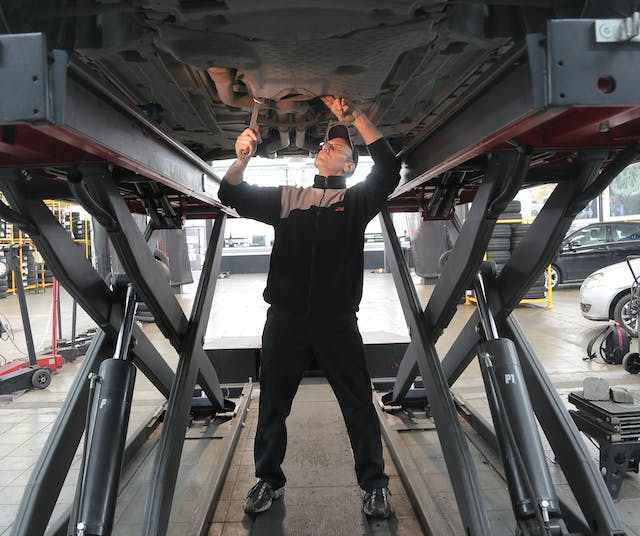
There are different types of preventive maintenance – each with its own set of merits.
Yet, alongside preventive maintenance, approaches like preventive and reactive maintenance, predictive, and reliability-centered maintenance each play their part in the maintenance ecosystem.
But why choose just one? A hybrid approach, combining elements from different strategies, can lead to greater cost optimization and enhanced operational efficiency.
Let’s further examine the intricacies and advantages of preventive maintenance and draw comparisons with its reactive and predictive counterparts.
Reactive maintenance waits for the storm to hit before looking for an umbrella, while preventive maintenance has it ready at the first sign of rain, complete with a raincoat and galoshes.
By transitioning to a proactive maintenance approach, construction companies can significantly enhance the reliability and efficiency of their operations.
The cost of construction vehicle downtime can be staggering, leading to project cost overruns and significant financial strain. Preventive maintenance aims to avert these breakdowns through scheduled equipment maintenance, as opposed to the reactive approach that attends to equipment failures only after they have occurred.
Examples of preventive maintenance include regular inspections, fluid level checks, filter changes, and the timely replacement of wearing parts. These maintenance processes are more than a series of tasks; they also represent a commitment to operational excellence.
The maintenance team plays a critical role in this, as they are the ones who carry out the maintenance tasks, ensuring that each vehicle is ready for its next job.
With today’s modern technology, it’s essential to keep gathering data from construction tools to back up strategies that prevent issues.
It also provides insights necessary for timely and effective maintenance by the maintenance team. This data-driven approach helps in identifying patterns that may indicate future equipment failure.
It allows maintenance processes to be adjusted accordingly, thereby upholding the principles of preventive maintenance.
Now let’s discuss the difference between preventive maintenance and predictive maintenance.
While preventive maintenance involves regular check-ups to maintain the health of your equipment, predictive maintenance is like wearing a mouthguard during high-impact sports – both are protective measures, but one is tailored to specific risk scenarios.
Predictive maintenance goes a step further than its preventive cousin, using advanced monitoring and historical data to pinpoint exactly when maintenance should occur, thereby helping to reduce costs associated with unplanned downtime.
Different types of preventive maintenance, such as usage-based and time-based, offer various degrees of precision, but predictive maintenance stands out with its data-driven approach, highlighting one of the key advantages of preventive maintenance.
Although the initial investment in technology for predictive maintenance may be substantial, the long-term cost savings and prevention of unplanned downtime often justify the expenditure, proving the advantages of preventive maintenance in the long run.

Even the best-laid plans can encounter turbulence, and preventive maintenance is no exception.
Communication breakdowns, coordination mishaps, and other challenges can introduce inefficiencies and inflate costs.
But fear not, for these hurdles are not insurmountable. Starting with a pilot program allows organizations to dip their toes into the benefits of preventive maintenance first, managing change effectively and scaling up based on initial successes.
Starting with the most critical assets and gradually widening the scope, companies can tackle the challenges of large-scale implementation.
Furthermore, utilizing data from preventive maintenance software provides compelling evidence of the program’s effectiveness, winning over leadership and securing support for ongoing maintenance initiatives.
The art of balancing maintenance costs lies in strategic investment and resource allocation. Investing in preventive maintenance upfront can significantly reduce the risk of construction vehicle failure and costly unplanned downtime. Companies can save between 12% and 18% by using preventive maintenance over-reactive, and each dollar spent on PM saves an average of $5 later on.
Proactive scheduling helps construction companies avoid budget overruns, but it’s important to note that it won’t eliminate all breakdowns.
Nonetheless, maintaining construction vehicles through preventive measures ensures they operate at peak performance, minimizing accidents and malfunctions critical to the construction industry.
By giving priority to preventive maintenance, construction companies can help with planning and operational efficiency. Tracking key performance indicators (KPIs) can also identify opportunities for cost reduction while maintaining peak vehicle performance.
A preventive maintenance program is akin to a well-designed fitness regimen for your equipment—too little attention leads to performance issues; too much results in wasted efforts and unnecessary costs.
To sidestep the trap of over-maintenance, a proactive maintenance philosophy is key. It emphasizes the importance of evaluating the necessity of each maintenance action, ensuring that every task yields real benefits that surpass the risks and costs involved.
Excessive preventive work can lead to a situation where the expenses surpass the advantages, underscoring the need for a balanced and proactive maintenance schedule.
By customizing maintenance plans to the actual requirements of the equipment, construction companies can conserve resources and maintain operational efficiency, all while adopting a proactive stance towards equipment management.

Creating a preventive maintenance plan for construction rentals or repair shops involves the following steps:
Thoroughly inventory all available assets.
Gather OEM manuals and craft a detailed preventive maintenance checklist tailored to the unique needs of construction vehicles.
The checklist should cover regular inspections, fluid checks, and component replacements, serving as preventive maintenance examples to guide the process.
Ensure that each vehicle is maintained to the highest standards of reliability and safety, incorporating preventive maintenance examples such as tire pressure monitoring and brake system inspections.
Procedures within the preventive maintenance plan should align with the company’s goals, such as optimizing equipment availability and minimizing repair turnaround times.
Implementing a structured preventive maintenance checklist based on industry best practices and manufacturer recommendations promotes compliance and efficient utilization of vehicles, meeting the high demands of rental customers and repair clients, while also providing clear examples for staff to follow.
In the pursuit of maintenance excellence, technology emerges as a powerful ally.
EMDECS, BrightOrder’s proprietary Fleet Maintenance and Management Software, offers a detailed solution tailored to the complex needs of fleet maintenance and management. Leveraging our quarter-century of experience in fleet maintenance management, EMDECS was designed to streamline operations and strengthen maintenance efficiency, ensuring that fleets are managed with the precision and care they deserve.
Among the myriad features of EMDECS, the Preventive Maintenance (PM) Scheduling Manager stands out, offering the following benefits:
Preventative Maintenance Schedules: Establish and manage schedules to keep fleets healthy, avoiding roadside breakdowns and protecting reputation.
Electronic Inspection Forms: Attach electronic inspection forms to enhance the value of preventative maintenance. These forms can require signature certification for legal compliance.
VRMS Coding: Use Vehicle Maintenance Reporting Standards (VRMS) coding to categorize inspection items. Failed or out-of-tolerance items generate repair jobs attached to unit records.
Certification: Repairing technicians can be required to certify repair jobs, ensuring accountability and compliance.
Organization and Ease of Management: EMDECS offers organized and easy-to-manage preventative maintenance schedules, a critical feature for competitive fleet businesses.
Preventative maintenance is crucial for keeping construction equipment in top shape. It’s all about being proactive rather than reactive, which means taking care of potential issues before they turn into big problems.
This guide has covered the essentials of preventative maintenance and how it can make a big difference in managing your fleet. With a solid preventative maintenance plan, you can reduce downtime, cut costs, and improve your projects.
Tools like EMDECS help you put this plan into action, making sure your fleet runs smoothly and efficiently. Think of this guide as your roadmap to a well-maintained fleet that’s ready for any challenge.
Want to see for yourself? Book a free demo and see how EMDECS can optimize your fleet operations firsthand.
Preventive maintenance for construction vehicles includes regular inspections and servicing to anticipate and resolve potential problems, ultimately ensuring consistent and reliable vehicle performance.
Preventive maintenance reduces equipment downtime and mitigates the risk of costly repairs by addressing potential issues before they escalate, minimizing unexpected breakdowns and costly disruptions to construction projects.
The key components of a preventive maintenance program are scheduled preventive maintenance tasks, monitoring and data analysis, and employee training and involvement. Together, these elements form a cohesive maintenance strategy that contributes to maintaining the health and efficiency of equipment and electrical systems.
EMDECS software enhances preventive maintenance by offering features like a PM Scheduling Manager and dedicated user portals, which streamline operations and improve preventive maintenance process efficiency. These features enable real-time tracking and paperless service orders, making preventive maintenance more efficient.
Preventive maintenance can help avoid over-maintenance by ensuring that maintenance tasks are performed only when necessary and when the benefits outweigh the associated risks and costs, preventing unnecessary expenses and conserving resources.
Adhering to a preventive maintenance schedule for construction vehicles is critical to ensuring the longevity and reliability of the equipment. By following a consistent maintenance timetable, which includes regular maintenance activities, companies can prevent the majority of equipment failures, reduce costly downtime, and extend the operational life of their fleet.
To stay updated on BrightOrder, and new developments in preventive maintenance, be sure to follow us on LinkedIn.MDE