


A preventive maintenance program in fleet management involves regular servicing, inspections, and repairs of vehicles based on criteria such as mileage, engine hours, or fuel usage.
The focus here is not on fixing problems as they arise, but on proactively maintaining vehicles to prevent issues from occurring in the first place.
Preventive maintenance tasks guarantee uptime. Less maintenance facility reduces repair costs and extends the life of your fleet vehicles.
Various preventive maintenance programs include inspecting vehicles, lubricating, adjusting, cleaning, testing, repairing, and replacing worn parts.
These measures help ensure vehicles remain in optimal condition and reduce vehicle breakdowns.
An effective fleet preventive maintenance program should include:
A comprehensive checklist, ideally based on the manufacturer’s recommendations
Coverage of all vehicle components to prevent future breakdowns
Maintaining a regular frequency of preventive maintenance tasks
Keeping costs down and ensuring vehicle safety
Averting the wasting of resources
Essentially, a proficient fleet preventive maintenance software, like EMDECS, helps you focus more on growing your business and less on putting out fires.

Preventive maintenance strategies can significantly lower fleet repair costs and a case study indicated a 20% reduction in maintenance and repair costs by implementing preventive maintenance strategies, thus avoiding major breakdowns and costly repairs.
Fleet maintenance programs that provide preventative maintenance alerts and track performance data are key to achieving these cost benefits.
Additionally, having a preventive maintenance checklist can significantly reduce repair costs and extend the operational lifespan of fleet vehicles.
Through a regular preventive maintenance checklist, a transportation company was able to:
Increase the average lifespan of their vehicles by 20%
Improve overall vehicle uptime
Reduce costs associated with unplanned repairs
Enhance delivery schedules and customer satisfaction
Contribute to a reduction in fuel consumption (a transportation company saw a 12% reduction in fuel consumption due to regular maintenance checks)
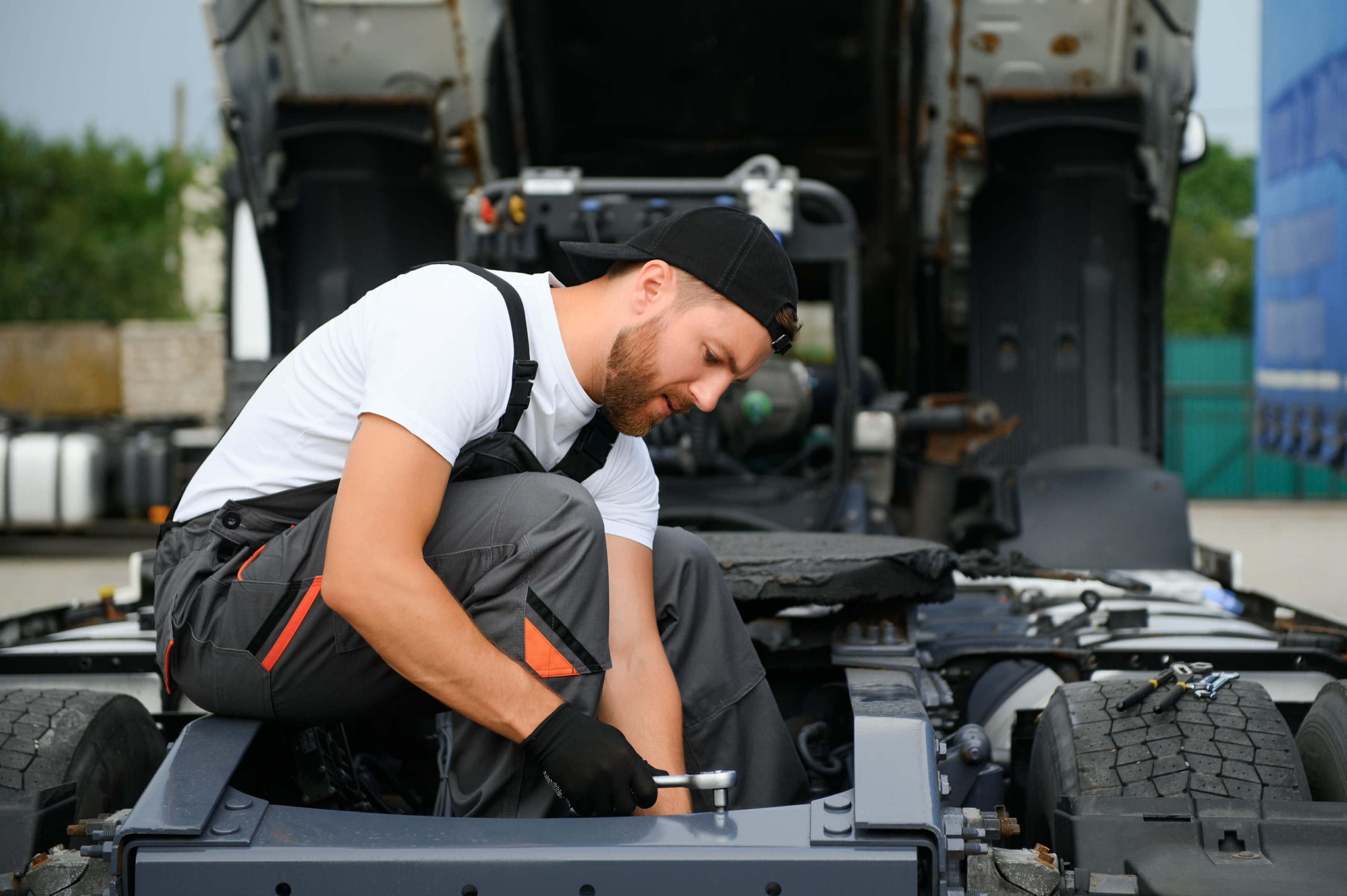
An effective preventive maintenance program is built on a comprehensive checklist of maintenance tasks, tailored to the specific needs of each vehicle in the fleet.
To inspect vehicles, this pre-service checklist should include:
Engine oil and filter changes
Chassis lubrication
Tire inspection
Transmission servicing
Brake system checks
Steering component checks
Cooling system inspections
Exhaust system inspections
Auxiliary systems
Fluid level fill-ups and fluid leaks
Ensuring the functionality of safety features like lights, horns, and windshield wipers
Before a new vehicle is put into operation, a pre-service vehicle inspection checklist is essential to log initial details and identify any immediate issues, ensuring they are addressed promptly.
Accurate and detailed records of inspections, repairs, and maintenance tasks carried out for each vehicle are vital for efficient fleet managers, aiding in tracking vehicle history and facilitating informed decision-making.
Vehicle operators and fleet managers play a pivotal role in the maintenance cycle.
They often detect subtle signs of vehicle issues during operation that may not be immediately evident to technicians.

Implementing a preventive maintenance strategy involves tailoring it to a fleet’s specific needs and this strategy may take various forms, depending on the unique requirements of your fleet as it encompasses processes and guidelines aimed at keeping vehicles operational and minimizing incidents and unplanned downtime.
For a preventive maintenance plan or program to be effective, it must be in harmony with your team and grounded on best practices. For instance, a delivery service fleet with numerous light-duty vehicles would prioritize frequent maintenance checks on brakes and tires due to constant stop-and-go traffic. On the other hand, a long-haul trucking company might focus more on engine and transmission health, given the extensive distances covered.
Now, when it comes to implementing the best preventive maintenance tasks, a key decision is whether to carry out the best preventive maintenance in-house or outsource it.
In-house fleet maintenance allows for better management and monitoring of costs due to familiarity with the business’s vehicles, drivers, and resources.
With in-house maintenance, businesses can build individual relationships with suppliers, ensuring service level agreements and negotiated rates benefit the company directly.
Moreover, an in-house operation has a clear understanding of the business’s wider plans and key goals, which may not be fully comprehended by an external service provider.
However, the capital cost associated with setting up suitable facilities and equipment can be disadvantageous for in-house maintenance.
By contrast, outsourcing fleet maintenance allows businesses to focus on core activities rather than being distracted by managing the fleet.
However, this option could result in relinquishing bargaining power in purchasing vehicle parts, where suppliers are predetermined in the contract, potentially leading to higher costs.
Additionally, when outsourcing, costs are often fixed in the contract, which can limit the potential for future savings and may include penalty clauses for amendments within the fixed period.
For different vehicle types with diverse maintenance needs, dictated by their uses, components, and operating conditions, it is crucial to establish a consistent vehicle maintenance schedule.
Preventive maintenance schedules should be determined by considering factors such as the type of vehicle and its operational conditions, to trigger maintenance activities effectively.
Early identification of potential issues, guaranteeing safety and performance, is made possible through regular vehicle inspections.
Drivers are required to verify that inspections are done with daily reports, even if no defect is found.
Using preventive maintenance checklists allows for scheduling and tracking but also ensures adherence to manufacturer recommendations and standardization of service intervals.
Effective preventive maintenance service checklist scheduling can be aided by a proactive preventive maintenance program for preventive maintenance tasks in bulk, applicable to all vehicle classes and non-vehicle equipment, improving consistency and following a preventive maintenance schedule.

Software like EMDECS plays a crucial role in simplifying preventive maintenance for fleet management.
It allows:
The creation of recurring service schedules
Initializing units to track when maintenance is due
Automating service reminders
Integrating inspection results to ensure timely maintenance
Providing real-time updates on vehicle conditions through telematics data
By automating maintenance processes, providing historical data patterns for proactive planning, and offering tailored reports, EMDECS preventive maintenance plans can prevent vehicle failures and reduce downtime.
Fleet solutions offer centralized control of vehicle systems, providing easy access to vehicle maintenance-related information and management of details and expenses across fleet vehicles.
Furthermore, it enables automated maintenance scheduling, delivering preventive maintenance alerts that help fleet managers adhere to scheduled tasks and incorporate service reminders based on odometer readings or engine hours.
The advantages of using fleet management software are numerous, including the use of predictive analytics to monitor vehicle conditions and anticipate maintenance needs, particularly for parts that are prone to frequent wear and tear.
By using a fleet management software, you can:
Reduce vehicle breakdowns and fleet downtime
Boost efficiency for drivers and employees
Improve vehicle performance
Enhance overall customer experiences
Minimize manual administration
Allocate and use resources more effectively
Real-time status updates and collaboration tools in fleet management software enable managers to respond rapidly to issues and unexpected breakdowns, even when off-site.

In fleet management, educating drivers on safe driving practices and maintenance staff on systematic maintenance programs is indispensable to ensure effective preventive maintenance and on-road safety.
Vehicle operators are responsible for keeping an eye out for any issues with a fleet vehicle and reporting them. The EMDECS driver portal app makes this process straightforward, allowing drivers to easily send information about any defects, including photos, so maintenance can be planned promptly.
Preventive maintenance and preventive tasks, along with routine maintenance tasks, are managed jointly by drivers and dedicated maintenance technicians.

Educating drivers on safe driving practices and guiding them on how to identify and report vehicle issues is vital to secure effective preventive maintenance and on-road safety.
To ensure on-road safety, it is important to establish a disciplined routine for pre-trip and post-trip inspections. These inspections should cover:
Brakes
Steering
Lighting
Tires
Other critical components
By conducting a thorough vehicle inspection, the risk of potential issues being missed is reduced.
Transitioning from paper inspection forms to eDVIRs allows for real-time updates on vehicle issues, promotes compliance, and enhances the efficiency of the maintenance process.
Regular training that reinforces safe driving habits is part of a continuous improvement strategy that minimizes liability and avoids fines, enhancing the overall preventive maintenance program.

Maintenance staff should be regularly educated on the systematic maintenance program to ensure vehicles are always maintained in a safe condition, as mandated by regulations.
Maintenance department personnel must understand their responsibility to address any defects noted by drivers in the DVIR before the vehicle is used again.
The introduction of incentive programs, alongside establishing clear communication paths and real-time monitoring, can lead to better performance and adherence to preventive maintenance plans and schedules.
Actively seeking and incorporating feedback from maintenance staff can lead to a deeper understanding of field situations and the continuous improvement of preventive maintenance strategies.
A vital aspect of preventive maintenance is the monitoring of key performance metrics, vehicle health trends, and analyzing a vehicle’s service history as it is important to monitor its productivity and health, which enables the identification of trends that can inform future preventive maintenance schedules and decisions.

Fleet reports not only forecast future service needs and measure the performance of preventive maintenance but also assist in avoiding downtime and unnecessary maintenance costs.
Preventive maintenance programs are found to significantly lower the downtime cost per vehicle, which can range from $448 to $760 per day.
Key maintenance metrics include repair turnover rate pre-service inspections, technician efficiency, and vehicle health tracking.
Cost control and adherence to the fleet maintenance budget are tracked through benchmarks such as total cost per mile, component costs, fuel expenses, taxes, registration, and optimal vehicle replacement timing.
Fuel management is monitored in real-time, assisting in optimizing refueling, monitoring for potential fuel theft or leaks, and providing insights into fuel efficiency.
Effective fleet management employs a continuous improvement approach, necessitating clear communication of strategies and access to real-time data to meet KPI goals.
Predictive analytics in preventive maintenance software aids in:
Anticipating potential regulatory issues for compliance management
Facilitating preventive maintenance intervals
Document renewal to meet safety and environmental standards
Machine learning capabilities in preventive maintenance software provide historical data analysis and repair predictions, which help in improving the efficiency of fleet operations.

EMDECS Fleet Management Software provides an all-encompassing solution for fleet preventive maintenance. It offers:
Real-time status updates of fleet operations from any location using any device with an internet connection
Paperless Repair Orders (ROs) with comprehensive information including technician hours, parts usage, and unit history
Preventative Maintenance (PM) Scheduling to keep track of fleet health and maintenance schedules
Access to customized reports and analyses
Ability to schedule e-reports and export or email data on various operational aspects
It also facilitates:
Automated electronic invoicing, transforming completed ROs into detailed invoices for customers
Triggering warranty campaigns for required work, adding parts and labor to ROs
Multiple user portals designed for different team members, allowing access to job-relevant information and functions
A move to a paperless operation, ensuring all relevant information is accessible digitally
EMDECS is globally recognized for improving heavy-duty fleet and truck maintenance management operations.
EMDECS, our flagship product at BrightOrder is a comprehensive software solution crafted for truck maintenance and tracking.
With the ambition to revolutionize fleet operations, we designed EMDECS to find the best way to help streamline any and every task undertaken by fleet operators.
We aspire to offer better, tailored solutions for the fleet sector; developed in close collaboration with:
EMDECS is used by a diverse array of industries, including heavy-duty repair shops, fleet operators, and emergency vehicle repair shops, providing them with unparalleled dedication and expertise.

The range of unique features distinguishes EMDECS from other solutions. Some key features of the software include:
Dedicated user portals for different team members, such as the Admin Portal for full feature access and the Driver Defect Portal for reporting equipment defects
The customer portal, which allows clients to access and download invoices, view maintenance history, and update equipment readings
An inventory management system that tracks part usage, manages multiple warehouse locations and auto-generates part reorder lists
These features make EMDECS a comprehensive and efficient solution for managing equipment, electrical system components, auxiliary systems, and maintenance.
Additional modules and integrations are available to customize the software to specific operational needs, including:
Accounting
Tire management
Rental and Leasing management
Third-party integrations
EMDECS is cloud-based, making it accessible from various locations and on different devices.
It utilizes Vehicle Maintenance Reporting Standards (VMRS) codes for job identification, which standardizes the maintenance process and enhances communication.
EMDECS provides a scalable centralized system that caters to the needs of businesses of all sizes, from small family-run teams to large operations with multiple locations.
The software integrates with other systems such as McLeod, telematics, and accounting software to streamline operations further.
EMDECS offers a live demo for potential customers to experience the software firsthand.
Implementation involves a collaborative effort with the EMDECS team to configure the system according to the fleet’s unique operational requirements.
Want to learn more? Schedule a free demo with us today!

In conclusion, an effective fleet preventive maintenance program can significantly enhance the efficiency of fleet operations, reduce costs, extend the lifespan of vehicles, and improve uptime.
Incorporating a fleet preventive maintenance plan and strategy that is tailored to the specific needs of your fleet, combined with the use of comprehensive fleet managing software like EMDECS, can substantially optimize your fleet performance.
Fleet preventive maintenance is a proactive, periodic, and routine maintenance of vehicles, equipment, and other business assets to keep them in optimal conditions, maximize availability, and prevent sudden, expensive malfunctions and subsequent downtimes.
To improve your fleet preventive maintenance plan, you can explore ways to make operations safer, faster, and easier, such as managing fuel costs, using preventive maintenance, optimizing routes, and utilizing fleet managing software. Incorporating mobile apps and real-time tracking can also help streamline maintenance processes.
To set up a fleet maintenance program, establish a maintenance schedule, have multiple drivers conduct regular inspections, keep accurate records, train your drivers, and utilize technology to streamline the process of performing inspections. This will ensure efficient and effective maintenance of your fleet.
To reduce the risk in managing the fleet, implement best practices such as vehicle inspections, driver training, and telematics technology for monitoring driver behavior. These measures can encourage safe driving practices and lower the risk of accidents.
To stay updated on BrightOrder and fleet preventive maintenance solutions, be sure to follow us on LinkedIn.